

Engine: AetherCore
Vesper Frontier
v2.4.0A tactical RPG focusing on persistent world states. Using our AetherCore framework, every faction decision re-renders political boundaries in real-time. It’s a study in mechanical consequence.
FieldVera applications aren't just software; they are structural experiments. We focus on the interconnectivity of systems—where haptic feedback meets procedural logic to create gaming environments that breathe.
Most developers simulate everything and lose the core loop. We prioritize 'perceived agency' over raw mathematical accuracy to save processing overhead without sacrificing immersion.
High-fidelity graphics often mask input lag. Our internal 'Drift' layer ensures frame-perfect responsiveness by decoupling render cycles from physics polling.
Complexity is not depth. If a player can't map a choice to an outcome, the logic is wasted. We use 'EchoScript' to telegraph permutations before they trigger.
A tactical RPG focusing on persistent world states. Using our AetherCore framework, every faction decision re-renders political boundaries in real-time. It’s a study in mechanical consequence.

Simulating traffic flow by mapping individual agent routines. UrbanGrid manages 50,000 unique paths simultaneously, providing a tactile, data-rich management experience.
Battle royale architecture prototype. VeraNet supports 128 players with server-authoritative physics, eliminating client-side manipulation in competitive sandboxes.
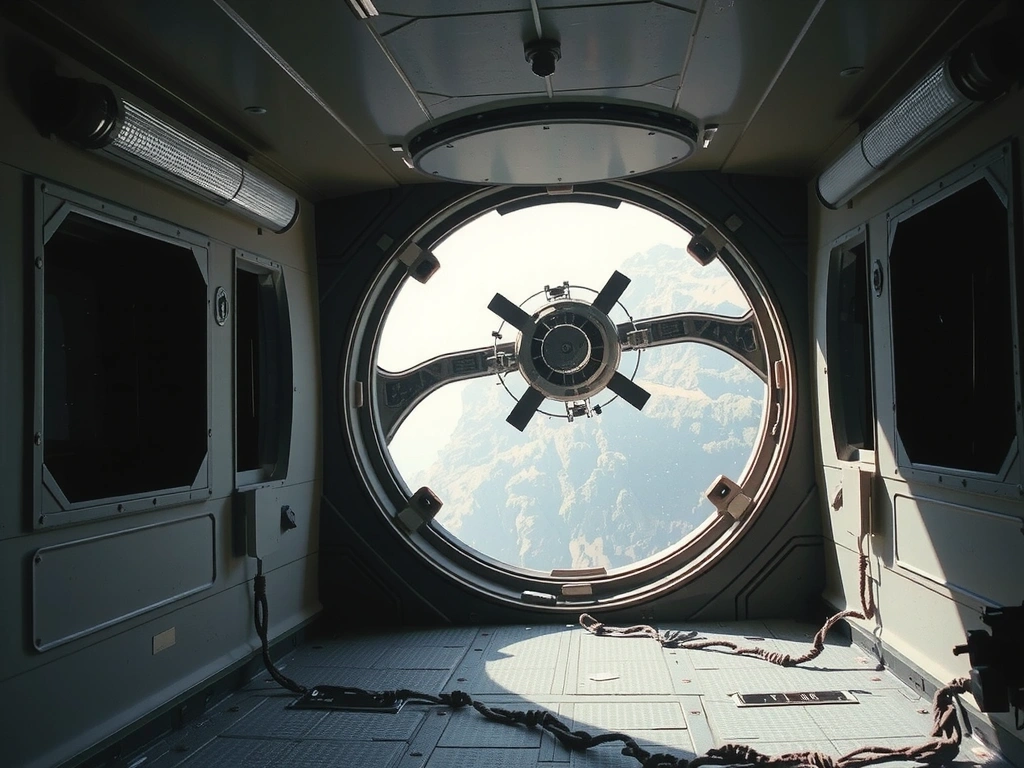
A space-navigation sim built with realistic orbital mechanics. Leverages our Zero-G module to simulate atmospheric drag and gravitational slingshots with 99.9% accuracy.
FieldVera Technical Brief 2026.04
We define robustness not by the absence of bugs, but by the graceful degradation of systems under extreme player load. This is the core trade-off: fidelity vs. stability.
In our development pipeline, every application undergoes what we call the 'Stress-Fringe' analysis. We don't just test the common path; we test the boundaries of the physics engine where floating-point math begins to jitter. For a game like Orbital Drift, this meant ensuring that even during high-velocity maneuvers, the UI remains perfectly locked to the observer's frame of reference.
The 'Lumen' lighting system we’ve integrated across the catalog is a prime example of architectural efficiency. By pre-baking global illumination for static assets while keeping dynamic shadow casting strictly localized, we achieve photorealistic depth on hardware that typically struggles with modern ray-tracing demands. It is about working within the physical constraints of the device to deliver an uncompromised aesthetic.
An anonymous narrative title in our catalog recently hit a milestone: 12,000 unique dialogue permutations. Instead of a linear script, our EchoScript engine treats every player choice as a ripple. The trade-off? Massive storage optimization was required. We solved this by using a procedural string generator that assembles dialogue fragments at runtime, reducing the asset footprint by 65%.
True innovation happens where the hardware hits its limit. FieldVera apps are optimized for longevity, ensuring that as hardware evolves, our clean architectural base remains compatible and efficient.
The Critical Inquiries
VeraNet utilizes a proprietary 'Interpolation Buffer' that predicts player movement based on established vectors. This allows for smooth visual playback even when momentary data dropped, prioritizing match integrity over visual stutter.
Absolutely. Every application in our catalog is engineered with 'Privacy by Design'. We store the bare minimum of technical telemetries, ensuring full GDPR compliance and local German data protection standards.
We optimize for power consumption by implementing 'Dynamic FPS Throttling' when input reflects a static state. Our simulations aim for a 15% lower battery impact compared to industry standard benchmarks.
Our frameworks (AetherCore, UrbanGrid) are built on open-modular standards. While we recommend the Vera stack for peak performance, we provide API hooks for third-party physics and audio engines.
Parity is achieved through fixed-step physics updates. Regardless of the device's refresh rate, the physics engine calculates at a constant delta-time to ensure identical outcomes on all platforms.